
Can family join employer sponsored visa australia?
Moving to Australia for work can be an exciting opportunity, especially when you can share the experience with your family. Many skilled workers who receive an Australian job offer want to know whether their spouse, partner, or children can accompany them. The good news is that Australia offers visa pathways that may allow eligible family members to live in the country alongside the primary visa holder. 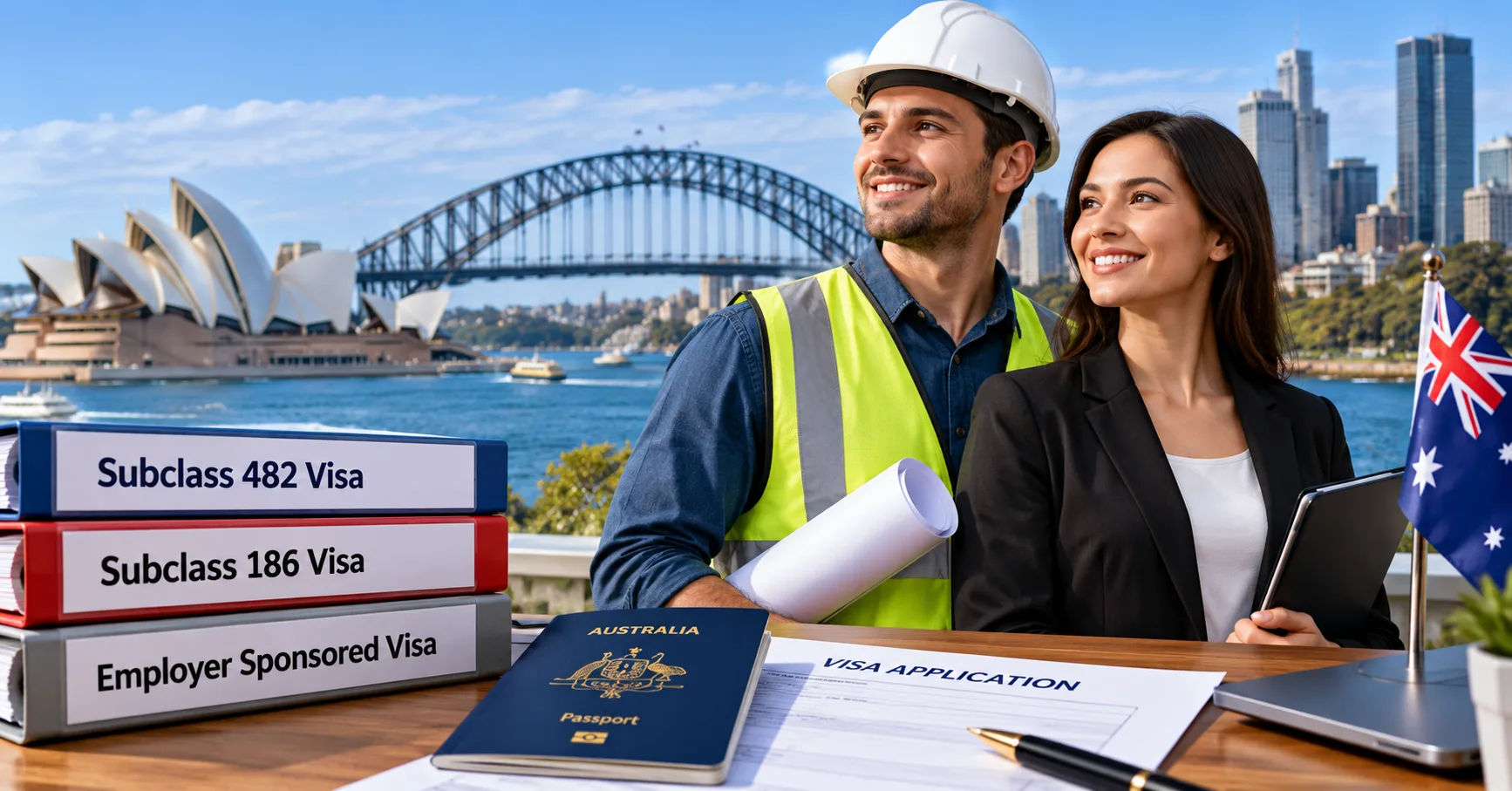 An employer sponsored visa australia pathway can provide opportunities for skilled workers to live and work in Australia while keeping their immediate family together. However, the rules depend on the specific visa subclass, the relationship between the applicant and their family members, and whether the relevant eligibility requirements are met. Understanding these conditions before submitting an application can help families plan their move with greater confidence.
Whether you are applying for a temporary work visa or a permanent employer-sponsored visa, it is important to understand how dependent family members are included, what documents are required, and what rights they may receive after arriving in Australia. This comprehensive guide explains the main considerations, common application mistakes, and practical steps families should take before making the move.
Which Family Members Can Join You in Australia?
The employer sponsored visa australia Australian immigration system generally allows eligible members of a worker's immediate family to accompany them under certain employer-sponsored visa arrangements. These family members are usually treated as secondary applicants or dependants.
However, not every relative automatically qualifies. The Department of Home Affairs applies specific definitions of family relationships and dependency.
Spouses and De Facto Partners
A legally married spouse may be eligible to accompany the primary applicant, provided the relationship meets the applicable immigration requirements.
A de facto partner may also qualify. In these cases, applicants generally need to demonstrate that their relationship is genuine and ongoing. Depending on their circumstances, they may need to provide evidence of shared finances, living arrangements, social recognition, and the length of their relationship.
Couples should provide consistent and truthful information throughout their applications. If they have recently married or started living together, they should explain their circumstances and submit the evidence relevant to their relationship.
Dependent Children and Stepchildren
Dependent children may also be eligible to join a parent in Australia. This can include the primary applicant's biological or adopted children, eligible stepchildren, and certain children of the applicant's partner.
Age and dependency are important considerations. For many employer-sponsored visa applications, a dependent child must be under 18 or meet specific requirements for an older dependent child. Under the subclass 482 arrangements, for example, certain children under 23 may qualify, while older children generally need to satisfy additional disability-related dependency requirements. The exact rules depend on the visa and the applicant's circumstances.
Parents, siblings, cousins, and other extended relatives are not automatically eligible to join an applicant as dependants under these arrangements. They may need to explore other visa options that match their circumstances.
Which Employer-Sponsored Visas Allow Family Members?
Australia has several employer-sponsored visa pathways. The appropriate option depends on the worker's occupation, employer, qualifications, experience, and eligibility.
Skills in Demand Visa (Subclass 482)
The Skills in Demand visa, subclass 482, is a temporary employer-sponsored visa that allows eligible skilled workers to work in Australia.
Applicants may generally include eligible family members in their applications. Their spouse or partner and dependent children may be able to receive visas that allow them to accompany the primary applicant.
The employer's sponsorship arrangements are important. Secondary applicants must meet the relevant requirements, and the nomination must include them or the sponsor must provide the required written agreement, depending on the circumstances.
This pathway can be useful for families who want to live together in Australia while the primary applicant works for the sponsoring employer.
Before applying, families should confirm the visa stream, the conditions attached to the visa, and any additional requirements that apply to their individual situation.
Employer Nomination Scheme Visa (Subclass 186)
The Employer Nomination Scheme visa, subclass 186, is a permanent residence pathway for eligible skilled workers nominated by an Australian employer.
Eligible family members can generally be included in the application. The Department of Home Affairs identifies partners, dependent children, stepchildren, and certain other qualifying children within the family unit as potential secondary applicants.
Family members must meet applicable health and character requirements. The application may also involve additional visa charges, medical examinations, police certificates, and other expenses.
One major advantage of this pathway is that successful applicants become Australian permanent residents. Eligible family members included in the application can also obtain permanent residence, subject to the relevant requirements.
Skilled Employer Sponsored Regional Visa (Subclass 494)
The subclass 494 visa is designed for eligible skilled workers nominated for positions in designated regional areas of Australia.
Eligible family members may be included, but the specific rules depend on the visa requirements and the family's circumstances. Applicants should check the relevant provisions before deciding whether to lodge a combined application or apply separately.
Regional employment may provide opportunities for families who are comfortable living outside Australia's largest metropolitan areas. Nevertheless, it is important to consider schools, healthcare, housing, transport, and employment opportunities for accompanying family members before relocating.
Can Your Family Join You After Your Visa Is Granted?
Yes, eligible family members may be able to join you later, even if they did not accompany you when you first moved to Australia. However, the process depends on your visa subclass.
For certain temporary employer-sponsored visas, a family member may apply as a subsequent entrant. This is a separate visa application that allows an eligible partner or dependent to join the primary visa holder.
The Department of Home Affairs specifically provides a subsequent entrant pathway for eligible family members of subclass 482 and certain former subclass 457 visa holders.
How the Subsequent Entrant Process Works
The process usually involves several steps.
-
Check the primary visa. Confirm that your current visa allows eligible family members to join you later.
-
Confirm family eligibility. Establish that your spouse, partner, or child meets the relevant definition of a family member.
-
Contact your employer. For a subclass 482 subsequent entrant application, the sponsor must provide a written letter extending its sponsorship obligations to cover the joining family member.
-
Gather supporting documents. Prepare relationship evidence, identity documents, and any required health or character records.
-
Submit the application. Lodge the relevant application and pay the applicable charges.
-
Wait for a decision. Your family member should follow the applicable visa conditions and travel requirements while the application is processed.
The Department states that family members cannot simply be added to an already submitted subclass 482 application. If they were omitted, a subsequent entrant application may be necessary.
Permanent visa applications have different rules. For example, eligible family members may be added to a subclass 186 application after lodgement but before a decision, subject to the relevant requirements.
Always check the rules for your particular visa rather than assuming that the same process applies to every employer-sponsored category.
What Documents Does Your Family Need?
Providing complete and accurate documentation is an important part of a family visa application. The documents required will depend on the relationship, visa subclass, and individual circumstances.
Identity Documents
Each family member may need to provide:
-
A valid passport.
-
Birth certificates for children.
-
Marriage certificates, where applicable.
-
Passport-sized photographs, if requested.
-
Evidence of any legal name changes.
-
Other identity documents requested by the Department.
Make sure names, dates of birth, and other personal details are consistent across the application and supporting records.
If documents are not in English, applicants may need to provide translations that meet Australian immigration requirements.
Relationship Evidence
Spouses and de facto partners should prepare documents that demonstrate the nature and history of their relationship.
Useful evidence may include joint bank statements, shared lease agreements, household bills, photographs, travel records, and evidence of shared responsibilities.
No single document guarantees approval. The goal is to provide a clear and truthful picture of the relationship.
For children, birth certificates and relevant legal documents may help establish parentage. If a child is a stepchild or has a different living arrangement, additional documentation may be required.
Health and Character Requirements
Family members applying for employer-sponsored visas may need to complete health examinations and meet character requirements.
Depending on their circumstances, they may be asked to provide police certificates or other records. The Department determines which checks are required.
Applicants should answer all questions accurately and disclose relevant information when requested. Failing to disclose important details can delay processing or affect the visa decision.
Can Your Spouse Work in Australia?
A spouse or eligible partner may be able to work in Australia, but the conditions attached to their visa must be checked carefully.
For many subclass 482 family members, the visa provides work rights, although individual conditions and the exact visa grant should always be reviewed. Work rights should never be assumed solely because the primary applicant has permission to work.
Before accepting employment, your partner should check their visa grant notice and applicable conditions through the Department of Home Affairs or the relevant official visa-checking service.
Employment Opportunities for Partners
Partners may explore opportunities in their existing profession or consider retraining for the Australian employment market.
They may need to meet professional registration requirements, demonstrate English proficiency, obtain local qualifications, or complete industry-specific checks. These requirements vary across occupations.
Families should also consider whether the primary applicant's work schedule, location, and income will make it practical for the partner to seek employment.
Planning ahead can make the transition easier and help both adults contribute to the family's financial stability.
Can Children Attend School in Australia?
Eligible dependent children may be able to live and study in Australia with their parents.
However, school arrangements and fees depend on several factors, including the child's visa, the state or territory where the family lives, and the type of school they attend.
Public schools do not necessarily provide free education to every temporary visa holder's child. Some states and territories charge tuition fees to children of temporary residents, while exemptions or concessions may apply in certain situations.
Families should contact the relevant education department before choosing a school or finalising their relocation plans.
Planning for School and Childcare
Parents should research school enrolment requirements, term dates, childcare availability, transport, and the distance between home and school.
They should also gather school reports, vaccination records, and other documents that may be required for enrolment.
For younger children, childcare costs can form a significant part of the family budget. Checking availability and fees in advance helps parents make informed decisions about housing and employment.
How Much Does It Cost to Bring Your Family?
The total cost depends on the visa subclass, the number of family members, and the requirements that apply to each applicant.
Families should prepare a budget covering more than the visa application charges.
Common expenses include:
-
Visa application charges for each applicant.
-
Medical examinations and possible additional health checks.
-
Police certificates and document translations.
-
Health insurance where required.
-
Flights and initial accommodation.
-
Rental bond and advance rent.
-
School fees, childcare, and uniforms.
-
Everyday expenses such as food, transport, utilities, and clothing.
For permanent employer-sponsored visas, additional charges may apply to adult family members who do not meet the relevant English-language requirements. For example, the subclass 186 visa has a second instalment in certain circumstances. The current official fee schedule should be checked before lodging an application.
A practical approach is to estimate the costs for every family member separately and maintain an emergency fund for unexpected expenses.
What Happens if Your Family Is Not Included in the Original Application?
The consequences depend on the visa subclass and the stage of the application.
For a temporary subclass 482 visa, family members who were not included may need to apply separately as subsequent entrants. The sponsor's written agreement and other requirements may apply.
For a subclass 186 permanent visa, eligible family members may generally be added after the initial application has been submitted, provided the application has not yet been decided and the applicable requirements are satisfied.
Applicants should notify the Department when relevant family circumstances change. For example, a marriage, separation, or the birth of a child may affect the information that must be provided.
Do not assume that a family member can travel to Australia simply because the primary applicant's visa has been approved. Each person must hold an appropriate visa or other lawful basis for entering Australia.
Common Mistakes Families Should Avoid
A well-prepared application can reduce avoidable delays and complications.
Providing Incomplete Relationship Evidence
Submitting a marriage certificate alone may not be enough to establish every aspect of a de facto relationship or explain unusual family circumstances. Provide evidence that directly addresses the requirements relevant to your case.
Assuming Every Relative Qualifies
Parents, siblings, and other relatives do not automatically qualify as dependants. Check the definition of family unit that applies to the specific visa.
Ignoring Visa Conditions
A family member's work, study, and travel rights depend on their visa conditions. Review the grant notice rather than relying on general information about another person's visa.
Underestimating the Budget
Visa charges, rent, health insurance, transport, and education costs can add up quickly. Prepare a realistic financial plan before moving.
Delaying the Application
Waiting until the primary applicant has settled in Australia can create additional administrative work. If possible, discuss family arrangements with the employer before the main application is lodged.
Practical Steps Before Moving to Australia
Families can make the process more manageable by following a clear plan.
First, identify the exact employer-sponsored visa subclass and confirm whether it permits eligible family members to accompany the primary applicant.
Second, speak with the sponsoring employer about nomination arrangements and any documentation needed for secondary applicants.
Third, prepare identity records, relationship evidence, children's documents, and any required translations.
Fourth, review visa charges and estimate the cost of living in the intended Australian location.
Fifth, investigate housing, schools, childcare, healthcare, transport, and job opportunities for the partner.
Finally, use the official Department of Home Affairs website to verify current eligibility rules and application procedures. If the family's circumstances are complicated, consider obtaining advice from a registered migration agent or an Australian legal practitioner qualified to provide immigration assistance.
These steps can help families avoid unnecessary uncertainty and prepare for a more organised relocation.
Conclusion
Yes, eligible family members can often join a worker through an employer sponsored visa australia pathway. Depending on the visa subclass, a spouse, de facto partner, dependent children, and certain stepchildren may be included in the initial application or may qualify to join later through a subsequent entrant application.
The subclass 482 Skills in Demand visa offers a temporary employer-sponsored pathway, while the subclass 186 Employer Nomination Scheme visa provides a route to permanent residence for eligible workers and their qualifying family members. The subclass 494 visa may also provide options for families moving to regional Australia.
However, family eligibility is not automatic. Applicants must meet the applicable relationship, health, character, sponsorship, and documentation requirements. They should also confirm work and study rights, understand the visa conditions, and budget for application charges and living expenses.
The best approach is to establish which visa applies to the primary applicant, check the rules for each family member, and prepare the necessary evidence before lodging the application. When families understand the process and plan carefully, they can make better decisions about relocating, settling into Australian life, and building a future together.