
How does online gaming multiplayer mode work?
Multiplayer gaming has changed the way people enjoy video games. Instead of playing alone against computer-controlled opponents, players can connect with friends, family members, and other gamers worldwide. Multiplayer technology makes it possible for several people to participate in the same virtual environment, compete against one another, and work together toward shared objectives. From exciting racing competitions to team-based adventures, this gaming experience offers many opportunities for entertainment and social interaction.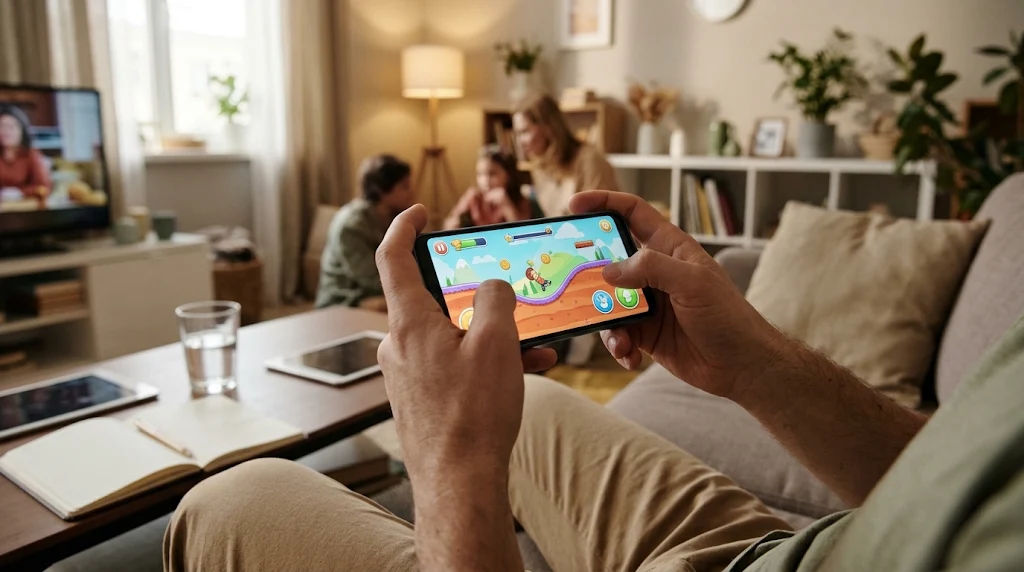
Understanding how multiplayer technology operates can help players appreciate what happens behind the screen. It involves internet connections, game servers, player accounts, communication systems, and synchronization technologies. These elements work together to create an interactive experience where different players can participate in the same match.
Today, online games use advanced networking systems to connect players across different locations and devices. Whether someone plays on a computer, gaming console, or smartphone, multiplayer technology allows compatible devices to communicate and exchange information. Understanding these systems explains how players join matches, interact with others, and experience gameplay together.
What Is Multiplayer Mode in Online Gaming?
Multiplayer mode is a gaming feature that allows two or more people to participate in the same game session. Unlike single-player experiences, where one person plays against computer-controlled characters, multiplayer environments involve multiple human participants.
Players can cooperate, compete, or complete objectives together. The exact experience depends on the game's design and the available multiplayer options.
For example, a racing game might allow several players to compete on the same track. A strategy game may encourage participants to build teams and develop shared plans. Similarly, adventure games can allow friends to explore virtual environments together.
Multiplayer modes generally require a network connection, although some games also support local multiplayer through shared devices or local networks.
How Multiplayer Differs From Single-Player Mode
The main difference involves the participation of other human players.
In single-player mode, the game controls most characters and opponents through programmed instructions. The player's actions influence the game environment without requiring communication with another human participant.
Multiplayer mode introduces additional players whose decisions influence the experience. Every participant can make independent choices, creating unpredictable situations.
This makes multiplayer gaming more interactive because players must respond to real decisions rather than relying entirely on programmed behavior.
How Does Multiplayer Gaming Technology Work?
Multiplayer technology depends on communication between gaming devices and network systems. When someone starts a multiplayer session, their device exchanges information with other connected systems.
This information includesOPEN88 movements, selected actions, game progress, and other important events.
The technology must process these updates quickly so that participants experience a consistent version of the game.
Connecting Players Through the Internet
The first step involves establishing a connection.
When players open a multiplayer game, the application checks the available network connection. Depending on the game, players may sign in to their accounts before entering a multiplayer environment.
The game then searches for available sessions or allows participants to create their own.
Once connected, the gaming device begins exchanging information with the systems responsible for managing the session.
A stable internet connection helps maintain communication and reduces interruptions during gameplay.
The Role of Game Servers
Game servers are important components of many multiplayer systems.
A server is a computer system that manages information and coordinates activities between connected players. It may track player positions, match progress, scores, and important game events.
For example, when one player moves through a virtual environment, the gaming device sends information about that movement to the server. The server processes the information and distributes relevant updates to other participants.
This helps everyone experience the same match.
Some games use dedicated servers, while others allow one player's device to host a session.
Understanding the Different Types of Multiplayer Systems
Not every multiplayer game uses the same connection method. Developers choose different networking approaches depending on gameplay requirements, technical limitations, and the expected number of participants.
Understanding these approaches makes multiplayer technology easier to understand.
Client-Server Architecture
Client-server architecture is a common approach in modern multiplayer gaming.
In this arrangement, each player's device acts as a client. The server coordinates the session and manages important game information.
The clients send their actions to the server, which processes the updates and communicates relevant information to connected devices.
This arrangement provides centralized management and can help maintain consistent gameplay.
It is particularly useful for competitive games where accurate scoring and reliable match information are important.
Peer-to-Peer Architecture
Peer-to-peer networking works differently.
Instead of depending entirely on a central game server, participating devices communicate directly with one another. One participant's device may sometimes act as the host.
This arrangement can reduce the need for dedicated server infrastructure.
However, the experience may depend more heavily on the host's internet connection and device performance.
If the hosting device disconnects, the entire session may experience interruptions, depending on the game's design.
Hybrid Multiplayer Systems
Some games combine different networking approaches.
A hybrid system may use central servers for account information, matchmaking, and other services while allowing certain gameplay communications to happen between participating devices.
This gives developers flexibility when designing multiplayer experiences.
The exact arrangement depends on the game's technical requirements.
How Do Players Join Multiplayer Matches?
Joining a multiplayer match usually involves a straightforward process. However, several technical operations happen in the background.
Creating a Player Account
Many multiplayer games require players to create accounts.
An account helps identify participants and store information such as usernames, achievements, settings, and progress.
Some games allow guest access, while others require account registration.
Players may also need to verify their accounts or connect them to a gaming platform.
Matchmaking Systems
Matchmaking helps players find suitable opponents or teammates.
When someone selects multiplayer mode, the game may search for other participants who are available.
Some matchmaking systems consider skill levels, selected game modes, geographic regions, and connection quality.
For example, a competitive game might try to place players with similar experience levels into the same match.
This can make competitions more balanced and enjoyable.
Joining Private and Public Lobbies
A lobby is a waiting area where players gather before a match begins.
Public lobbies allow participants to join sessions with other available players.
Private lobbies provide more control because players can invite friends or share access with selected participants.
Once the required players have joined, the host or game system can start the session.
Why Internet Speed Matters in Multiplayer Gaming
Internet quality plays an important role in multiplayer performance.
A connection must transmit information between gaming devices and network systems. If communication becomes delayed or interrupted, players may notice problems during gameplay.
However, internet speed is not the only factor that matters.
Understanding Ping
Ping measures the time required for information to travel between a gaming device and a server and return.
It is generally measured in milliseconds.
Lower ping usually means faster communication, which is particularly important in competitive multiplayer experiences.
For example, when a player presses a button, the game may need to send that action to a server before other participants receive the corresponding update.
High ping can make actions appear delayed.
Understanding Latency
Latency describes the delay involved in transferring information through a network.
Several factors can influence latency, including:
-
Distance between the player and the server.
-
Internet service quality.
-
Network congestion.
-
Router performance.
-
Wireless signal strength.
-
Network routing conditions.
A nearby server often provides a shorter communication route, although the actual experience depends on network conditions.
What Is Lag?
Lag occurs when gameplay does not respond as smoothly as expected.
Players might notice delayed movements, temporary freezing, or unexpected changes in character positions.
Lag can result from network problems, overloaded servers, or limited device performance.
It is important to identify the source because internet-related lag and hardware-related performance problems require different solutions.
How Do Multiplayer Games Synchronize Players?
Synchronization means keeping the game information consistent across participating devices.
This is one of the most important technical challenges in multiplayer development.
Imagine two players standing in the same virtual environment. One player moves toward a building while the other watches from a different location.
Both devices must receive updates about the movement so that the players see a reasonably consistent version of the environment.
Sharing Player Actions
Gaming devices regularly exchange information about player activities.
These updates may include:
-
Character movements.
-
Player positions.
-
Selected abilities.
-
Game scores.
-
Object interactions.
-
Match progress.
The game processes these updates and displays the results.
Understanding Tick Rates
A tick is an update cycle during which a server processes game information.
Some multiplayer games use regular update cycles to check player actions and refresh the shared game state.
A higher tick rate can provide more frequent updates, although performance also depends on network conditions, server capacity, and game design.
Developers must balance update frequency with technical resources.
Interpolation and Prediction
Multiplayer games sometimes use techniques that make movement appear smoother.
Interpolation estimates positions between received updates. This helps characters move naturally on screen instead of appearing to jump between separate positions.
Prediction estimates what may happen before the next update arrives.
These techniques can improve the experience when network communication is delayed.
However, the game may need to correct predicted actions when new information becomes available.
What Types of Multiplayer Modes Are Available?
Different multiplayer formats offer different experiences. Some emphasize teamwork, while others focus on individual competition.
Cooperative Multiplayer
Cooperative multiplayer allows participants to work together.
Players may complete missions, solve challenges, explore environments, or defeat computer-controlled opponents.
This format encourages communication and teamwork.
It is especially popular in adventure games, survival experiences, and mission-based titles.
Competitive Multiplayer
Competitive multiplayer places participants against one another.
Players compete to achieve higher scores, complete objectives, or outperform opponents.
Examples include racing competitions, fighting games, sports simulations, and strategy challenges.
These experiences often include ranking systems and competitive matchmaking.
Team-Based Multiplayer
Team-based modes divide participants into groups.
Each team works toward a shared objective, such as controlling an area, collecting points, or completing a mission.
Communication becomes important because players need to coordinate their activities.
Different characters may also have unique abilities that contribute to team performance.
Massively Multiplayer Online Games
Massively multiplayer online games, commonly called MMOs, support large numbers of participants within shared virtual environments.
Players can explore extensive worlds, complete missions, interact with other participants, and take part in community activities.
Some games also include trading systems, guilds, special events, and long-term progression.
These environments can continue operating even when individual players log out.
How Does Voice and Text Communication Work?
Communication features help players coordinate their activities.
Many multiplayer experiences include built-in voice chat, text messaging, or quick communication commands.
Voice Chat Systems
Voice chat allows players to speak with teammates during a match.
The gaming device captures audio and converts it into digital information. The information is transmitted through a communication service and delivered to other participants.
Players can usually adjust microphone settings, mute participants, or select communication channels.
Text Chat and Quick Messages
Text chat provides another way to communicate.
Players can exchange written messages, share information, or coordinate activities.
Some games also include predefined messages such as requests for assistance or notifications about objectives.
These features are useful when someone cannot use a microphone.
How Do Cross-Platform Multiplayer Games Work?
Cross-platform multiplayer allows people using different gaming devices to participate in compatible sessions.
For example, a computer player might compete against someone using a gaming console.
This feature requires developers to create networking systems that support different hardware and software environments.
Platform Compatibility
Different devices have different operating systems, hardware capabilities, and control systems.
Developers must ensure that supported platforms can exchange compatible game information.
Account systems and platform permissions may also influence cross-platform access.
Cross-Progression
Cross-progression is another useful feature.
It allows certain player information, such as achievements or game progress, to remain available across supported devices.
However, cross-progression and cross-platform multiplayer are separate features. A game may support one without supporting the other.
What Equipment Is Needed for Multiplayer Gaming?
The equipment required depends on the game and its platform.
Most players need a compatible gaming device and an internet connection.
However, some additional equipment can improve convenience and communication.
Gaming Device
A computer, console, or smartphone can provide access to multiplayer experiences.
Players should check the game's system requirements before installing it.
These requirements may include operating system versions, storage capacity, memory, and graphics capabilities.
Internet Router
A router connects devices to a local network and helps distribute internet access.
A reliable router can support more consistent communication between gaming devices and online services.
Its performance depends on network conditions, placement, and the number of connected devices.
Headset and Microphone
A headset can make communication easier.
It allows players to hear teammates and speak without relying on a separate speaker and microphone.
However, voice communication is optional in many multiplayer games.
Is Multiplayer Gaming Safe?
Safety is an important consideration because multiplayer environments connect people from different backgrounds and locations.
Players should understand basic privacy and communication practices before participating.
Protecting Personal Information
Avoid sharing private information such as home addresses, passwords, phone numbers, or financial details with other players.
A gaming username should not reveal unnecessary personal information.
Strong account passwords and available security features can also help protect gaming accounts.
Using Communication Controls
Many games provide tools for managing interactions.
These may include blocking, muting, reporting, and restricting messages.
Players can use these controls when conversations become uncomfortable or inappropriate.
Understanding In-Game Purchases
Some multiplayer titles offer optional purchases, subscriptions, or downloadable content.
Players should understand the difference between free features and paid services.
Checking purchase settings and obtaining appropriate permission before spending money can help prevent unwanted transactions.
Common Multiplayer Problems and Their Solutions
Even well-designed multiplayer systems can experience technical problems.
Understanding common issues helps players identify possible causes.
Connection Failures
Connection failures may occur when the internet becomes unavailable or the gaming service experiences technical difficulties.
Checking the network connection and the game's service status can help identify the issue.
Unexpected Disconnections
Players may disconnect because of unstable internet access, server interruptions, or temporary software problems.
Keeping the game updated and using a reliable network can reduce some common connection issues.
Matchmaking Delays
Sometimes players must wait before joining a match.
This can happen when fewer participants are available in a selected region or game mode.
Changing the selected game mode, when appropriate, may help players find available sessions.
Performance Problems
Slow performance can result from limited hardware resources, background applications, or network interruptions.
Checking system requirements and maintaining updated software can improve overall reliability.
The Future of Multiplayer Gaming
Multiplayer technology continues to develop as internet infrastructure and gaming hardware improve.
Developers are exploring new ways to make shared gaming environments more accessible, interactive, and realistic.
Cloud Gaming
Cloud gaming allows supported titles to run on remote computing systems rather than depending entirely on local hardware.
The player's device receives streamed game visuals while sending control information to the service.
This technology may make certain gaming experiences available on devices with limited processing capabilities.
However, it depends heavily on a suitable internet connection.
Virtual Reality Multiplayer
Virtual reality introduces more immersive ways to interact with other participants.
Players can use supported headsets and controllers to explore shared environments.
Some experiences allow participants to communicate through virtual gestures and spatial interactions.
Artificial Intelligence and Multiplayer Experiences
Artificial intelligence can support different parts of multiplayer development.
It may help improve matchmaking, moderate inappropriate behavior, and create more responsive computer-controlled characters.
Developers can also use AI-assisted systems to analyze gameplay information and improve game balance.
These technologies may make future multiplayer environments more dynamic.
Conclusion
Multiplayer mode has become one of the most important features of modern gaming. It allows people to connect through shared virtual environments, participate in competitions, complete cooperative missions, and communicate with other players. Behind these experiences, several technologies work together to make gameplay possible.
Internet connections, game servers, matchmaking systems, and synchronization methods all contribute to the multiplayer experience. Each component has a specific responsibility, from connecting participants to keeping game information consistent across different devices.
Understanding client-server and peer-to-peer networking also explains why different games can offer different multiplayer experiences. Some depend on dedicated servers, while others use alternative communication arrangements.
Connection quality is another important consideration. Ping, latency, and network stability can influence how quickly player actions appear during a match. Meanwhile, communication tools, cross-platform compatibility, and account systems make multiplayer environments more accessible and interactive.
Players should also understand privacy settings, account protection, and responsible communication. These practices help create a more positive gaming environment.
As technology develops, cloud gaming, virtual reality, and artificial intelligence may introduce additional possibilities. These improvements could make shared gaming experiences more accessible and engaging.
Ultimately, multiplayer mode works by connecting individual gaming devices through communication systems that coordinate player activities. This combination of networking technology and interactive design allows people to enjoy shared experiences regardless of where they are located. Understanding how online games operate makes it easier to appreciate the technology that brings modern multiplayer entertainment together.